
Home › Forums › Bass Cat Boats › Changing seastar steering fluid help
 oldtimer57.
Looking for feedback from someone who has changed the power steering fluid for sea star on a cougar. Mine is 9 years old and like brake fluid I know it can absorb moisture. Literature is everywhere how to get “air bubbles” out of the line but not much on actually replacing the entire fluid. Looking for input from owners who have done this and what result did you notice, if any, after a complete fluid change.

First get some mats made to absorb fluids/oils and lay under the Hydraulic cylinder. I changed the seals on mine (a 2005) so I drained at the same time. Kinda like brake fluid, I don’t think you can completely drain the system unless you open the rear cylinder and if I was going to do that, I would be prepared to change the seals. To drain as much as I could before opening the cylinder, I used two 6′ 1/4″ clear hose leading to a catch bottle. Each of the other end on the bleed valves. open the valves and turn the steering wheel lock to lock several times and this will remove a lot of the fluid, but not all. When you take the seal out, more will come out (reason for the absorption mat). If you’re going to remove the seals, you need to loosen the span nuts on each side before you start removing fluid — makes life easier. You’ll also need to remove the arms so you can slide the ram back and forth, giving the ability remove it. Several videos on replacing seals available. Hope this helps.
John
If you are going to take the time to replace the fluid… Go ahead and change the o-rings too.. U can get the kit at almost any boat shop. I changed mine in the fall and it’s easy. I have a 2008 Puma. Only other item to do it to remove the driver’s windshield to replace the fluid. The kit comes with everything or atleast kine did.. The wrench in the kit is made for the end caps. Then just close 1 bleeder and turn steering wheel until all air is out. Close that bleeder and do the same to other.. Will need 2 people to do that.. Takes about 30-45 mins to do complete job.. It tighten or took the slack out of my steering.
Sent from my iPhone using Tapatalk

There is one seal they don’t provide, the seal on the hydraulic ram. I found a perfect match at a local seal supply store. If you hold your wheel straight and the boat starts to slowly turn unless you keep feeding in a steering correction, that hydraulic ram seal needs replacement, and it is more than likely that on an older boat, the cylinder itself has a grove worn in the inside where that seal rests and vibrates continuously. Only fix there is to replace the cylinder unless you want to try to have the cylinder bored out slightly and then find a slightly bigger seal to compensate.
Good fluid is AW32 hydraulic fluid from O’Reillys, for about $20 a gallon, compared to SeaStar’s fund at over $20 per quart.
Would using a air compressed brake line bleeder on the bleeders in the back, very cheep at harbor freight, along with someone at the helm with a long nose funnel and fluid, work to change it. In theory it’s the same process you pull a vacuum and suck the older fluid out until you see the new fluid that is fed from the stern. The kit from harbor freight come with a reservoir that will hold the new fluid with a tip that will actually fit in the hole to make sure fluid remains and no air enters. Any thoughts ?
Not sure, but don’t see why not. I do the opposite. Someone at the helm turning the wheel, me at the back opening/closing the bleeders as I swap from side to side after moving motor. Bleeding is not really hard. If you do a search, you can find detailed instructions I wrote here a long while back on how to do this painlessly. If you can’t find them, let me know and I will re-type…
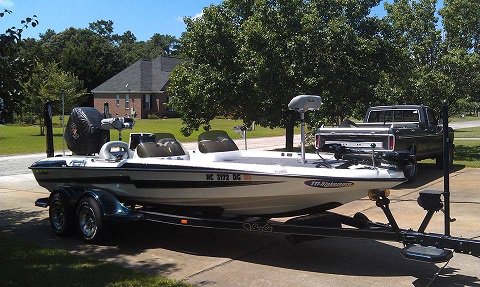
Take the windshield off, if that is where the fill is. Take two water bottles and empty them. Put the caps back on and drill a hole in each cap in the center. Go and buy some clear tube that is the diameter of the bleeder valve on the ram. You can either open one or both of the valves at the same time, Put the tubes on the bleeders and install the new fluid bottle. Turning the steering wheel,which is a pump and just turning in any direction, there is no turn stop. Watching the fluid flowing through the hoses, that is why you bought clear hose, you will know when the old is out and the new begins to flow. Me, I ran 1 bottle in each direction. When one direction is completed, close that bleeder and do the same process for the other direction. Sitting the bottles upright you can do this without anyone else to assist. Hope it helps
That won’t complete the job. You MUST do the following before opening any bleeder valve.
1. Turn wheel to right until motor stops turning. Then open bleeder on right side of cylinder, prevent the motor from moving, and turn the wheel in the opposite direction until there are no bubbles visible. Close bleeder
2. Turn wheel to left until motor stops turning. Then open bleeder on the left side of cylinder, prevent the motor from moving, and turn the wheel in the opposite direction until there are no bubbles visible. Close bleeder.
To prevent the motor from moving while you turn the wheel with the bleeder open, you can (a) have a helper hold the back of the motor (helper needs to be pretty strong); (b) wrap a piece of leather around the steering ram shaft and clamp with vice grips. Critical to protect the shaft from scratches and nicks; (c) use a block of wood that fits between the steering cylinder and the bracket on the end of the steering pushrod. I use (b) myself.
You have to do this as otherwise, with the piston (internal to the cylinder) somewhere in the middle, there is room inside the cylinder to hold air bubbles. If you turn the wheel as far as it will go, you force that piston all the way to the end of its travel. That constricts the space on that side so that fluid coming in pushes any trapped bubbles of air out the bleeder port.
This is explained in the sea star / uflex cylinder bleeding instructions you can find from either supplier online… That way you will end up with rock-solid steering with no sponginess.
It is even better if you disconnect the cylinder from the tiller arm on the motor to let the cylinder go to its max travel position, otherwise you can still have a very small bit of space between the piston and the seal on that end that can trap a little air. Disconnecting the cylinder will let the piston move all the way until it contacts the seal/gland on that end to perfectly eliminate any possible air.
© 2026 Bass Cat Boats
